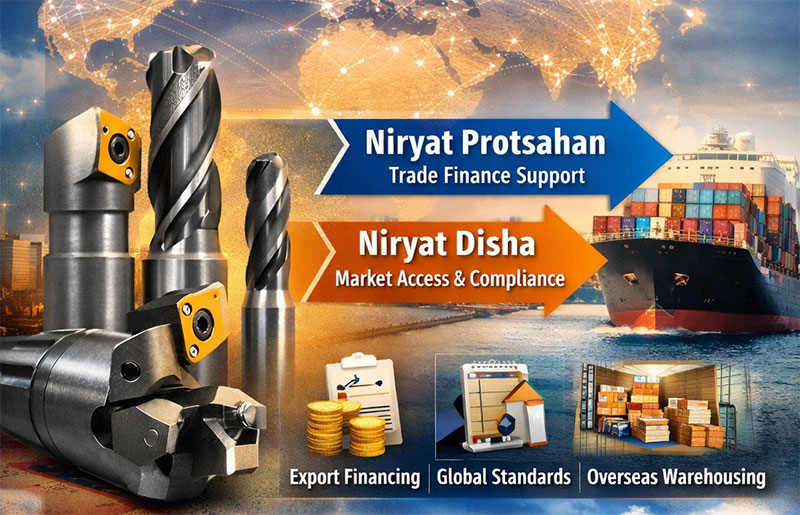
The Export Promotion Mission (EPM), approved by the Government of India in November 2025, is…
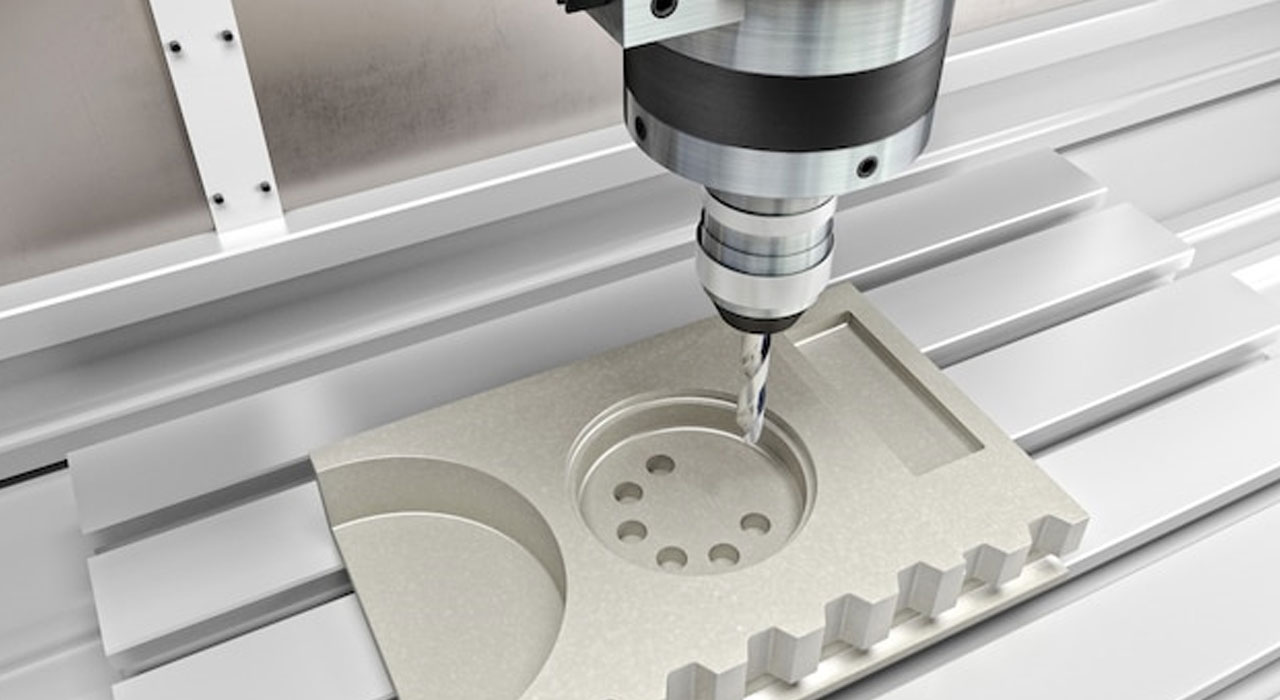
India’s Die & Mould Sector: Rising as a Global Powerhouse
India’s die and mould industry is experiencing an era of transformation—one marked by growing global demand, rapid adoption of advanced manufacturing technologies, and a rising reputation for precision engineering. Once viewed primarily as a low-cost outsourcing destination, India is now positioning itself as a global powerhouse in the die and mould tooling sector. With a projected growth rate of over 8% annually and government-backed initiatives fueling infrastructure and industrial expansion, Indian toolmakers are stepping into a new league—ready to serve the most demanding applications in automotive, aerospace, electronics, medical devices, and more.
The Backbone of Manufacturing
Die and mould tooling lies at the core of mass production. Every component—from automobile panels and smartphone cases to medical syringes and packaging caps—starts with a meticulously engineered tool. As industries evolve, so does the complexity and precision required from these tools. This has propelled global demand for highly durable, high-accuracy dies and moulds, and Indian companies are answering that call with enhanced capabilities and international-quality offerings.
As of 2024, India’s die and mould market is estimated at USD 2.5 billion, with projections to surpass USD 4 billion by 2030, fueled by exports and strong domestic consumption. Major clusters in Mumbai, Pune, Bengaluru, Chennai, Gurugram, and Ahmedabad are bustling with activity, as both MSMEs and large enterprises invest in capacity expansion, CNC machinery, and skilled manpower.
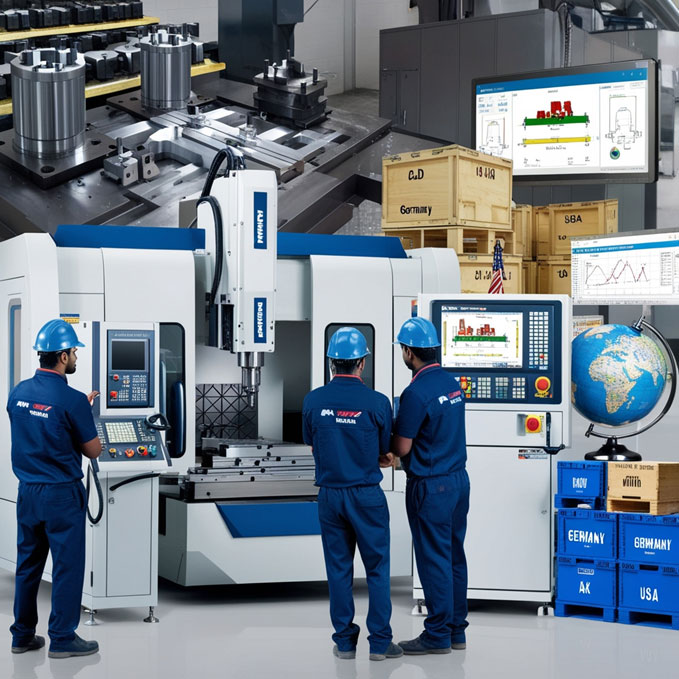
Driving Factors Behind India’s Rise
- Automotive and EV Revolution
India’s status as the fourth-largest automotive market is a key driver. Traditional internal combustion engine (ICE) tooling needs are now being augmented by new demands from electric vehicle (EV) manufacturers—for battery enclosures, lightweight aluminum die-cast components, and precision plastic housings. Leading toolrooms are adapting by integrating advanced CAD/CAM, simulation software, and multi-axis machining to cater to these evolving needs. - Government Support and Localization Push
The Indian government’s “Make in India” and “Atmanirbhar Bharat” initiatives have been instrumental in boosting local manufacturing. Through schemes like the Production-Linked Incentive (PLI), duty exemptions on capital goods, and technology upgradation programs, Indian toolmakers are accessing better financing, modern machinery, and collaborative R&D platforms. - Export Opportunities and Global Recognition
India’s tooling exports have grown steadily, with key markets including the U.S., Germany, Italy, and Southeast Asia. Indian firms are increasingly being chosen as Tier-1 and Tier-2 suppliers for global OEMs, thanks to improvements in quality assurance, certification (ISO, AS9100, IATF 16949), and reduced lead times.
Technology Transformation
To meet global standards, Indian toolmakers are investing heavily in:
- 5-Axis CNC Machining: For improved surface finish and precision across complex geometries.
- High-Speed Milling & EDM: Reducing cycle times and achieving tighter tolerances.
- Additive Manufacturing: Metal 3D printing is being used for conformal cooling channels in injection moulds, slashing cooling times and improving part quality.
- Digital Simulation & Flow Analysis: Software tools like Moldex3D, AutoForm, and Magmasoft are helping Indian toolrooms simulate and validate die/mould performance before physical trials—cutting down rework and time-to-market.
- Automation & IoT Integration: From robotic handling of tool inserts to predictive maintenance using sensors, smart manufacturing is becoming a reality.
Skilling the Workforce
Despite these advancements, one of the industry’s biggest challenges remains a shortage of skilled manpower. Tool and die making is a specialized trade that requires mechanical aptitude, software knowledge, and hands-on experience. Recognizing this gap, several private toolrooms have launched their own training centers, while government-led institutions like NTTF, MSME Tool Rooms, and ITI centers are scaling up their curriculum to include digital technologies.
Apprenticeship programs, in-house training modules, and partnerships with German and Japanese tooling institutes are on the rise, aiming to build a robust, future-ready workforce.
Challenges on the Horizon
While growth is encouraging, the sector still faces hurdles:
- Raw Material Costs: Dependence on imported tool steel can strain margins and increase lead times.
- Technology Adoption Gap: Many smaller toolrooms still lag in adopting CNC automation or simulation tools due to cost or lack of training.
- Global Competition: Chinese, Taiwanese, and South Korean manufacturers often compete aggressively on price, although Indian firms are gaining an edge through customization and service quality.
The Road Ahead
India’s die and mould industry stands at a tipping point. With the global manufacturing landscape shifting and OEMs seeking diversified supply chains, Indian toolmakers have a golden opportunity to scale up, modernize, and capture a larger share of the global pie.
To sustain this momentum, the focus must remain on:
- Investing in high-end technology
- Improving turnaround times
- Developing globally certified workforce
- Building strong after-sales and service capabilities
In the coming decade, India is not just expected to serve global tooling demand—but to lead it. By combining traditional engineering strength with modern manufacturing intelligence, Indian die and mould manufacturers are truly forging a future that is globally competitive, technologically advanced, and proudly Made in India.
Related Posts